

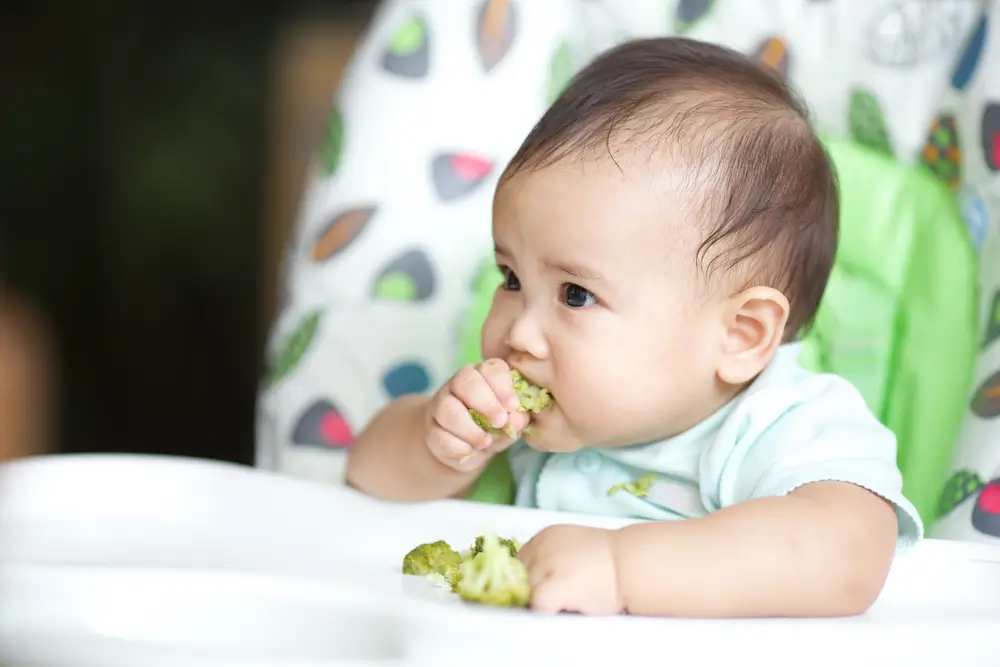


Until your baby reaches their first birthday, most of their nutrients will come from formula or breast milk. However, some soft solid foods, such as purees and baby finger foods, can be introduced beforehand.
Finger foods are a great way for babies to get used to textures and flavors – and being able to touch and squish their foods is a fantastic sensory experience! At first finger foods are more for exploration, but by the time babies stop drinking formula or drink less breast milk, which happens around age one, baby finger foods will become staples in their growing diet.
In this article we share more on what age to introduce finger foods to your baby and include easy finger food ideas that the whole family can enjoy.
{{table_of_contents}}
What is a Baby Finger Food?
Finger foods are manageable pieces of food that your baby can pick up with their fingers and bring to their mouth.
In addition to getting your baby comfortable with solids and introducing them to new tastes and textures, finger foods have developmental benefits such as oral motor skills development, sensory awareness, and strengthening dexterity of fingers and hands.
For example, finger foods benefit babies by helping to develop the pincer movement between their thumb and pointer finger. They also help your baby develop new tongue patterns and practice chewing to break foods apart.
The first finger foods offered to a baby are typically softer and in larger pieces for easier grasping. As your baby gets older and develops more teeth, strength, and personal preferences, types and sizes of finger foods can change.
What Age Do You Introduce Finger Foods?
When to start finger foods depends. Most babies are introduced to solid foods for the first time around 6 months, some as early as 4 months, but there are many different approaches for how to do it.
A common sequence many healthcare providers recommend is starting with pureed foods, then moving to meltables, and later introducing baby finger foods. This is because when a baby is older, between 8-10 months, they often have an easier time with finger food. Some parents choose baby-led weaning and others do a combination of baby-led weaning and purees. Your healthcare provider can share their personal recommendation.
Regardless of what approach you choose, as your baby ages and gets more used to eating solid foods, what baby finger foods and how you feed them may also change.
For example, if you choose to offer finger foods for a 6-month-old, they should be soft and served in large pieces they can grab. Mashed banana and avocado are good choices, as your baby most likely has less dexterity at this age to pick up smaller foods with a pincer grip. Plus, they are just starting to teethe.
On the other hand, finger foods for an 11-month-old could include noodles, berries, toast, meatballs, chicken, and steamed vegetables cut into bite size or manageable pieces, as they have an easier time chewing with their gums or new teeth. Plus, they have more dexterity with their hands so finger foods that may have been harder to pick up now can be added to their diet.
Signs of readiness
As with all milestones, every baby is different in terms of readiness for solid baby finger foods.
To be able to start solid baby finger foods, or any solids, babies should:
- Be able to hold their heads up
- Have started sitting up on their own
- Show some interest in foods, such as starting grab at food or stare at you when you’re eating
Eating solids requires coordination of muscles in the neck, jaw, cheeks and tongue to chew and swallow, in addition to hand and finger strength, so some foods may be trickier in the beginning. Plus, new textures are also a sensory experience – many babies will prefer mushing and squishing their food instead of eating.
Keep in mind babies will often gag when trying new foods. The gag reflex is normal and will improve with age and familiarity with solid foods. This is why purees or soft baby finger foods are best for new eaters.
If your baby is refusing solids, don’t worry. Nearly all nutrients come from drinking formula or breast milk until their first birthday.
If you’re concerned about your baby’s solid food consumption, or their readiness for solids, speak to your healthcare provider.
Infant Finger Food Ideas
Good finger foods for infants differ from what finger foods for toddlers may be.
Here are some quick finger food ideas to get you cooking. Speak to your healthcare provider to determine when to introduce certain foods depending on your baby’s age and readiness.
Fruits and vegetables
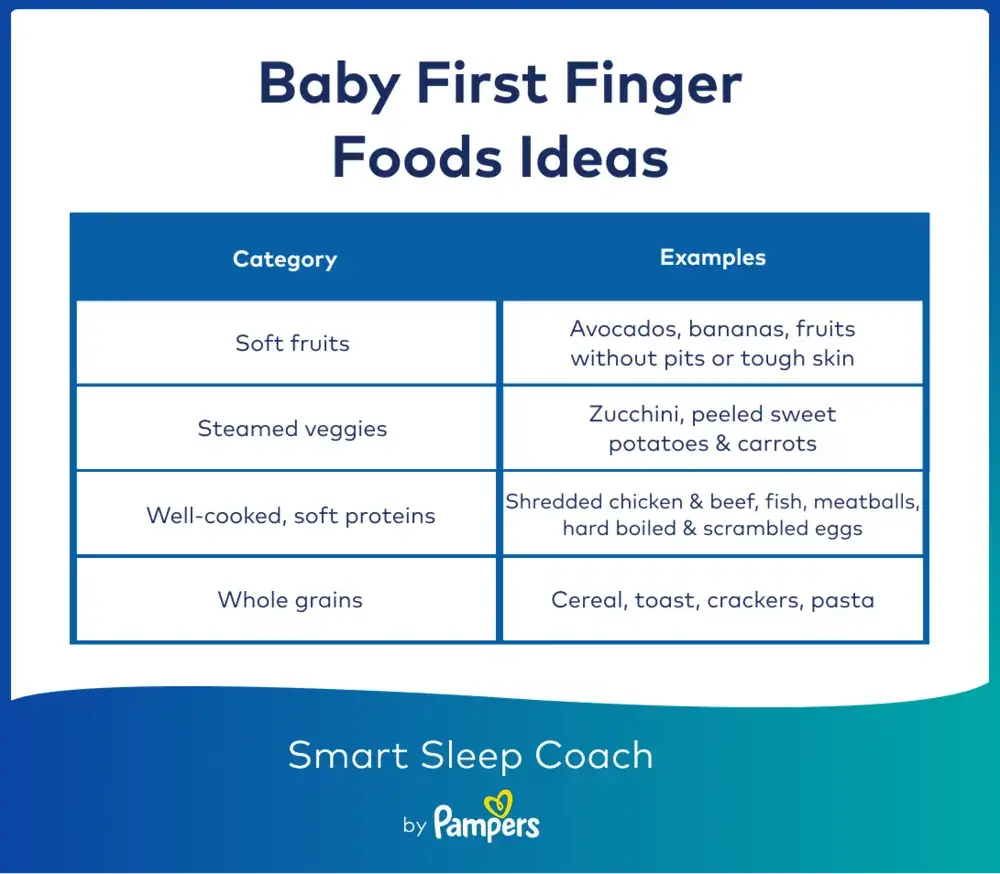
- Bananas and avocados are both a soft and healthy finger food that many babies love to mush. They can be cut into big slices to make it easier for your baby to pick up and gum.
- Wedges of steamed zucchini and peeled sweet potato and carrots can be easily picked up and gummed.
Proteins and eggs
- Well-cooked and salt-free shredded chicken, beef, or fish are great healthy finger foods that introduce protein and new textures.
- Soft meatballs that are cut or mashed are yummy lunch or dinner options. These can be great first table foods for infants, something the whole family can enjoy.
- Whole wheat toast (with no honey) cut into strips with a thin layer of hummus or nut butter is tasty and easy to pick up.
- Hard-boiled eggs are a good choice for a healthy breakfast finger food idea. This is a great cold finger food option, too!
- Omelettes cut into strips are easy to make finger foods.
- Simple finger foods like baby pancakes made by blending egg, banana, and oats and cut into strips are a sweet finger food with no added honey or sugar.
Other options and finger food snacks
- Soft-cooked noodles
- Meltable puffs or crackers
- Whole grain Os cereal
- Soft fruits without pits or tough skin
- Yogurt bites
Finger Food Safety
There are many components to baby finger food safety.
Stay with your baby
It’s important to watch your baby when they are eating solids. They may get frustrated or need help, and it also is a safety issue.
While gaggling can be expected while they get used to solid foods, it’s important to watch for any signs of choking.
Also, eating together is a bonding experience and a chance to further develop their social, emotional, and communication skills.
Avoid choking hazards
While gagging is part of learning how to chew and swallow, there are certain foods that are considered choking hazards for an infant. These include:
- Whole grapes
- Nuts
- Corn kernels
- Hot dogs
- Raw vegetables
- Hard raw fruits
Gagging versus choking
The gag reflex is a normal, protective reflex that moves food forward in your baby’s mouth, helping them learn to chew and manage solids safely while reducing the risk of choking. A baby who is gagging typically coughs and make noises.
On the other hand, a baby who is choking will not make the gagging sound. They will struggle to breathe and won't make noise and will need immediate help from you. Speak to your healthcare provider for more guidance on how to prepare for starting solids.
Consider allergies
It’s recommended to slowly introduce one new food at a time to ensure your baby does not have an allergy. Speak with your healthcare provider about their recommendations for how and when to introduce new foods and allergens.
Prepare food correctly
When preparing foods for your baby, be sure to cook all raw vegetables until they are very soft. Hard fruits such as apples and pears should be peeled and cooked until soft as well.
When cooking eggs, be sure they are cooked all the way through. This means that scrambled eggs should not be runny or loose and boiled eggs must be hard cooked. All proteins should also be cooked all the way through with all fat, skin, and/or bones carefully removed.
Remember to start with larger pieces of finger foods first so your baby can practice picking up the food, chewing, gumming, and swallowing.
Don't serve unsafe ingredients
In addition to foods that are choking hazards, there are certain items that are unsafe for babies under one-year-old.
Babies should not be served honey or any finger foods made with honey. Same goes for raw eggs, raw fish, and anything unpasteurized.
While cooked items with cow’s milk are okay, do not let your baby drink cow’s milk plain before their first birthday. They should only drink breast milk or formula until they are one.
Will Starting Finger Foods Affect Sleep?
Many babies continue with night feeds after starting solids, so don’t expect your baby to immediately start sleeping through the night just because of finger foods – especially if they are under 9-months-old.
However, speak to your healthcare provider to see if it’s time to drop a night feed, which means your baby is getting all the nutrition they need during the day. If your provider says night feeds are no longer needed, take this free sleep quiz to get a personalized plan for how to phase out the night feed.
Also to note, sometimes starting solid foods may coincide with other baby milestones that impact sleep. Download the Smart Sleep Coach by PampersTM app to get a smart sleep schedule (which includes feeding tracking) that adjusts to your baby’s sleep patterns as they grow. It will tell you the exact time each day to put them to sleep – giving them a better chance that they fall asleep quick and stay asleep longer.
Final Thoughts
Introducing your baby to finger foods is one of the many exciting, important milestones in their journey to starting solids. It is fun (and often funny) to watch how they react to new flavors and textures.
Always consult with your healthcare provider before you start your baby on their solids journey with a baby finger food. While some parents choose to start with purees before introducing a baby finger food, both can be safe and nutritional, and of course, deliciously messy.
Remember that just like any milestone in your baby’s life, the transition to infant finger foods can take time, just like getting them to sleep in their crib or sleep through the night does. Be patient and encouraging and enjoy this new phase with your little one.


