




When your baby is little, they’ll need frequent feedings to get the nutrients needed to fuel their growth – and that includes throughout the night. But, as they get older, they’ll start to get more of the food they need during the day – and less and less of it at night – until, eventually, they cut out night feeds.
While night feedings usually slow naturally after the first few months, every baby is different and it’s common for some to continue feeding at night well into their first year. This is when your baby’s healthcare provider may suggest night weaning.
Read on to learn more about what is night weaning, the importance of night weaning, when and how to eliminate night feeds, and when to night wean and when to not.
{{table_of_contents}}
What is Night Weaning?
Night weaning is a gradual process of eliminating nighttime feedings for your baby until they are no longer feeding at night. It can happen naturally or with the help of caregivers when an infant begins to consume enough calories during the day they have enough to sustain them overnight.
While some babies naturally start sleeping through the night and stop waking up to feed, others may need a bit more support to stop middle of the night feeds. If your baby is older and continues to wake even if they are not hungry, night weaning also plays a role in encouraging independent sleep. Additionally, night weaning can provide benefits such as preventing tooth decay, improving sleep quality, and supporting healthy growth.
Night weaning doesn’t guarantee that your baby will sleep through the night. It’s normal for babies, toddlers, and even adults, to wake between sleep cycles. But, if your baby is still waking and struggling to fall back to sleep, consider sleep training with a baby sleep app. It’s a proven way to help them sleep better at night.
When to Stop Overnight Feeds
Wondering when do babies drop night feeds? The answer depends on a few factors.
Usually, night feedings start to slow naturally once your baby develops their circadian rhythm and takes in more during the daytime feeds, generally around 3-4 months. Even if your baby starts sleeping longer stretches at an earlier age, you still should wake a newborn to eat.
After the 4th trimester, many will continue to wake for feeds at night or need to be fed at night. Some will naturally stop waking for feeds on their own, others may continue to wake by habit even if they aren’t hungry or don’t need a night feed.
Every baby’s needs are different and your healthcare provider will let you know when your baby is ready to drop a night feed. It’s often recommended you stop night feeds by the time your baby turns one, often before.
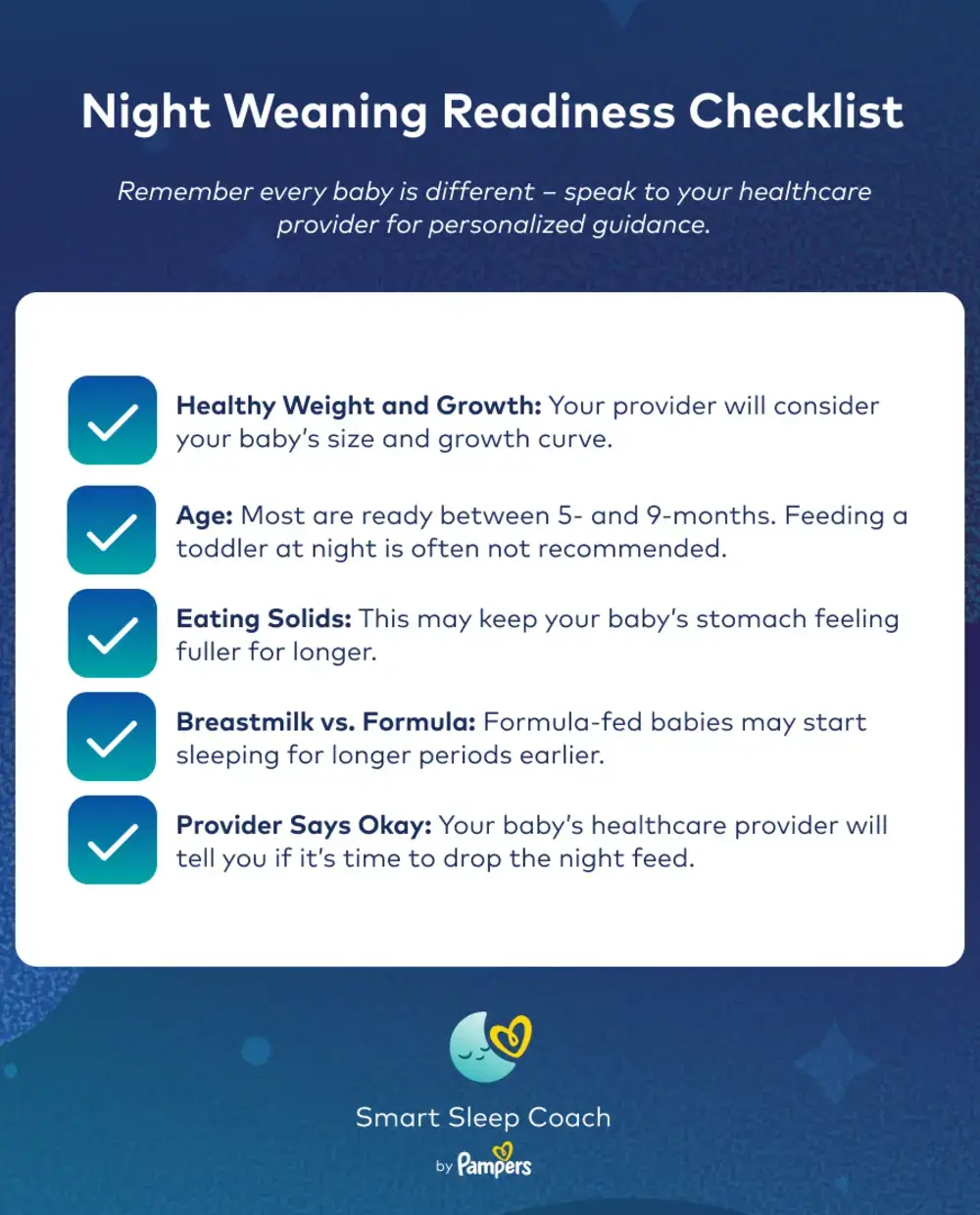
While infant feeding patterns can differ, the following factors may determine when it’s time for night weaning:
- Weight and Growth: Your healthcare provider will look at your baby’s weight and where they're at on their growth curve to determine if you can wean night feeds.
- Age: Somewhere between 5- and 9-months, and latest 12-months, is when most babies become ready to stop feeding at night. Continuing to feed a toddler when they wake at night is typically not recommended.
- Eating Solids: While babies will still get the majority of their nutrients from breastmilk or formula during their first year, solids may keep your baby’s stomach feeling fuller for longer. Learn more about the connection between introducing solids and sleep.
- Breastfed vs. Formula-fed: When to stop overnight feeds may be different if your baby is breastfeeding or formula feeding. Studies show formula-fed babies start sleeping for longer periods of time earlier than those who are breastfed.
That said: You know your baby best, so if you have approval from your healthcare provider to stop night weaning and you don’t feel ready, no pressure – you can consider delaying until you are.
Night Weaning Checklist
The Importance of Stopping Night Feeds
Stopping night feeds is important for many reasons, whether it comes naturally or requires night weaning. Continuing unnecessary middle of the night feedings, especially after your child’s first birthday, can cause issues such as:
- Skipping Daytime Meals: As your baby becomes older, they should receive enough of their calorie intake from daytime feedings. If they continue to feed at night, they may skip out on feedings during the day which allow them to get the nutrients they need.
- Unhealthy Growth: Continuing night feeds beyond when recommended can result in unhealthy weight gains and even the onset of early obesity.
- Cavities: Health authorities say that night feeds can increase cavities because of prolonged exposure of teeth to the sugars from formula or breastmilk.
- Disrupted Sleep:
- Some babies continue to rely on feeding as a way to fall asleep, which prevents them from being able to fall asleep independently. This can lead to frequent wakeups, early wakeups, overtiredness, and overall unhealthy sleep habits that can affect both your and your baby’s sleep quality, too. It can also prevent their body from getting the time it needs to rest and focus on things other than digestion.
- Prolonged Sleep Regression: Babies naturally have temporary bouts of disrupted sleep because of developmental growth and changes. However, motn feedings to soothe your baby if they are struggling with sleep for other reasons can further exasperate the sleep regression – and make night weaning even harder.
How to Stop Night Feeds
For some babies, cutting out night feeds will come naturally – they get enough food during the day and will naturally sleep through the night without waking. If your baby has to go ahead from your healthcare provider, you don’t need to wake them up to feed at night.
For others, they may continue to wake to night feed out of comfort or habit rather than hunger or need. This is when night weaning comes in.
Whether you're combo feeding, breastfeeding, or formula-feeding, sleep consultants generally recommend using a gradual approach to night weaning. The cold turkey approach to night weaning may work for some babies, too. Speak to your healthcare provider if you have questions.
While breastfeeding night weaning and formula night feeding approaches are similar, there are some unique considerations for both.
How to night wean from breastfeeding
Some babies like to wake for feeding for the comfort of being close to mom, not actual hunger. That’s why breastfeeding night feeds can be harder to drop.
While every baby is different, our team of sleep consultants often recommend trying a gradual approach to night wean from breastfeeding over several weeks to make the adjustment process easier. How to wean breastfeeding at night gradually can work by:
- Replacing Feedings: Replace nursing feeds with bottle feeds one session at a time. You can also try a dream feed to help increase the chances they will not wake again at night. Make sure that you’re doing dream feedings safely and correctly.
- Shorten Nursing Sessions: Shorten nursing sessions at night as a way to wean. If your baby notices, try to comfort or soothe them in other ways to get them back to sleep.
- Increase Daytime Solid Food Intake: If your baby is nearing their first birthday and you've been introducing solid foods, try to increase the amount of food they eat to balance out calorie intake from breastmilk. Your baby will still get the majority of their nutrients from breastmilk or formula, so it’s normal for them to still sometimes refuse solids.
- Don’t Offer, Don't Refuse: Breastfeeding organizations say that if your child is one or older, don’t offer a feeding and see if they request it. If they do, you can offer it. Over time this method may naturally lead to less feedings.
- Avoid Nursing Cues: When dropping a night feed stay away from spots or positions you would usually nurse in, such as a rocking chair or a nursing position. Having another caregiver support with night weaning can also prevent them from smelling mom's milk, which is a cue.
- Provide Extra Comfort: As your baby weans at night, provide them with more affection and comfort than usual. The emotional component of breastfeeding can make weaning difficult, especially in older babies or toddlers, so more cuddles can help.
- Move Your Baby to Another Room: If you still room share, consider moving your baby to their own room before starting to night wean.
- Ask for Help: Having another caregiver comfort your baby at night can help you and your baby during the process, especially if you have been breastfeeding. Often, if nursing is not an option, a baby will settle more quickly back to sleep.
- Try Sleep Training: If night feeds seem less about hunger and more about needing help to fall asleep, take this free sleep assessment and see if sleep training could be your solution for how to stop night feeds. Especially if your baby is closer to 12-months-old!
- You can even sleep train if your baby is still feeding at night – it’s all about helping them develop the skills to fall asleep independently, which is a key to wean from nursing at night. Keep in mind it is often harder to sleep train a toddler.
Night time weaning from breastfeeding will take time and patience. Remember to give yourself grace in the process. If you have approval from your healthcare provider, your baby is ready to drop the feed.
How to night wean from formula
Your baby will naturally wean from formula as they begin to consume solid foods. While breastfeeding can continue well into toddlerhood, babies no longer need formula after they turn one. The more solids they start to consume, the less formula they’ll drink.
However, night weaning a formula-fed baby may still be necessary if they continue to wake. Try these approaches:
- Wean Gradually: Like with breastfeeding, weaning gradually versus going cold turkey can better ease their transition out of night feeds.
- Reduce Feeding Size: Gradually reduce the amount of formula given in a middle of the night feeding session to get them used to eating less at night.
- Keep Them Full During the Day: Ensure your baby is getting the calorie intake they need through daytime feeds so that they don’t get hungry at night.
- Provide Additional Comfort: If your baby wakes up at night and is fussing, don’t assume they’re hungry. Try other forms of comfort to help them get back to sleep.
Learn more about weaning from formula for daytime feeds here.
How to Make Night Weaning Easier for Everyone
Just like sleep training, night weaning takes more than choosing a method – there are extra steps that help your baby more easily and successfully stop waking for overnight feeds.
- Try Dream Feeding: Feeding your baby before you go to sleep, without fully waking them, helps make sure they get the nourishment they need to sleep through the night without another feed.
- Perfect Your Daytime Schedule: Ensure your baby is on the right eat, play, sleep schedule during the day so they aren’t hungry at night.
- Ensure a Consistent Bedtime Routine: A predictable, consistent bedtime routine will help your baby know it’s time to sleep.
- Optimize Sleep Environment: Creating the optimal sleep environment for your baby will help them sleep better – that means a room that’s dark, cool, and quiet.
- Break Feeding to Sleep Association: Feed before you begin the bedtime routine so feeding isn’t the last thing your baby does before sleep..
- Don’t Night Wean if Baby is Sick: If your baby is sick, continue to offer night feedings to ease the physical discomfort. Weaning a sick baby at night is not best for you or them – wait until they feel better.
- Night Wean When Your Baby is Ready: Follow your baby’s lead when they’re ready to stop night feeding. Following the approaches recommended, your baby may naturally stop on their own. (Also, if you’re not ready either, that’s okay too!)
- Focus on Independent Sleep: If your baby still struggles to fall asleep independently, download the Smart Sleep Coach by PampersTM app to get your own step-by-step plan just for them.
Managing Milk Supply During Night Weaning
Milk supply may decrease when you start feeding less at night – this is a natural way for your body responds. In fact, this is why many moms notice their milk supply at 3 months start to change.
If you want to keep up your supply during night weaning, consider adding a pumping or feeding session during the day (or right before bed).
You can also ease breast discomfort as you wean night feeds by:
- Weaning Gradually: Doing so allows your body to adapt to the lessening of breastfeeding in a smooth and painless manner.
- Pumping: Relieve your breasts if you’re left with an oversupply or feel discomfort as you get your body used to not feeding at night.
- Using a Cold Compress: Your best friend for managing swelling and pain.
- Talk to Your Own Provider: If you’re in pain or have any concerns around weaning, talk with your healthcare provider for their recommendations.
When Not to Night Wean
There are some situations when it may make sense to delay beginning to night wean, even if your healthcare provider has given you the go ahead.
For example, as we mentioned, if your baby is feeling sick you can wait until they feel better.
Another reason could be if there have been big changes for your baby, such as travel, a move, or the birth of a sibling. Consistency is key and you want to set you both up for success!
You know your baby best, so if you’re not ready to night wean that’s okay too.
Final Thoughts
While night feedings may start to slow down around 3-4 months, it’s normal for babies to continue waking at night to eat well into their first year. While some babies will stop waking to feed at night as early as 5 months, others continue feeding until 9-months or even later –and this is when night weaning comes in.
Getting approval from your healthcare provider, taking a gradual approach, and following our tips can make the whole process of night weaning much easier – just remember to be patient with yourself and your baby. Also, try to enjoy the cuddles! In the blink of an eye, those middle-of-the-night moments will be a thing of the past.


