Understanding the 8 Month Sleep Regression

Last Updated: 
November 30, 2025
 | 
8
 minutes read
Written by
Mandy Treeby
Chief Baby Sleep Consultant
Medically reviewed by
Elissa Gross, DO
Board Certified Pediatrician & Lactation Consultant

TL;DR: What Do I Need to Know About the 8 Month Sleep Regression?

  • f your 8-month-old baby suddenly starts waking frequently at night, refusing naps, or acting extra fussy at bedtime, you may be entering the 8-month sleep regression – a normal, temporary stage as your baby’s sleep patterns and development change.
  • The 8-month-sleep regression is often triggered by major developmental milestones like learning to craw, teething and separation anxiety, all of which can affect sleep.
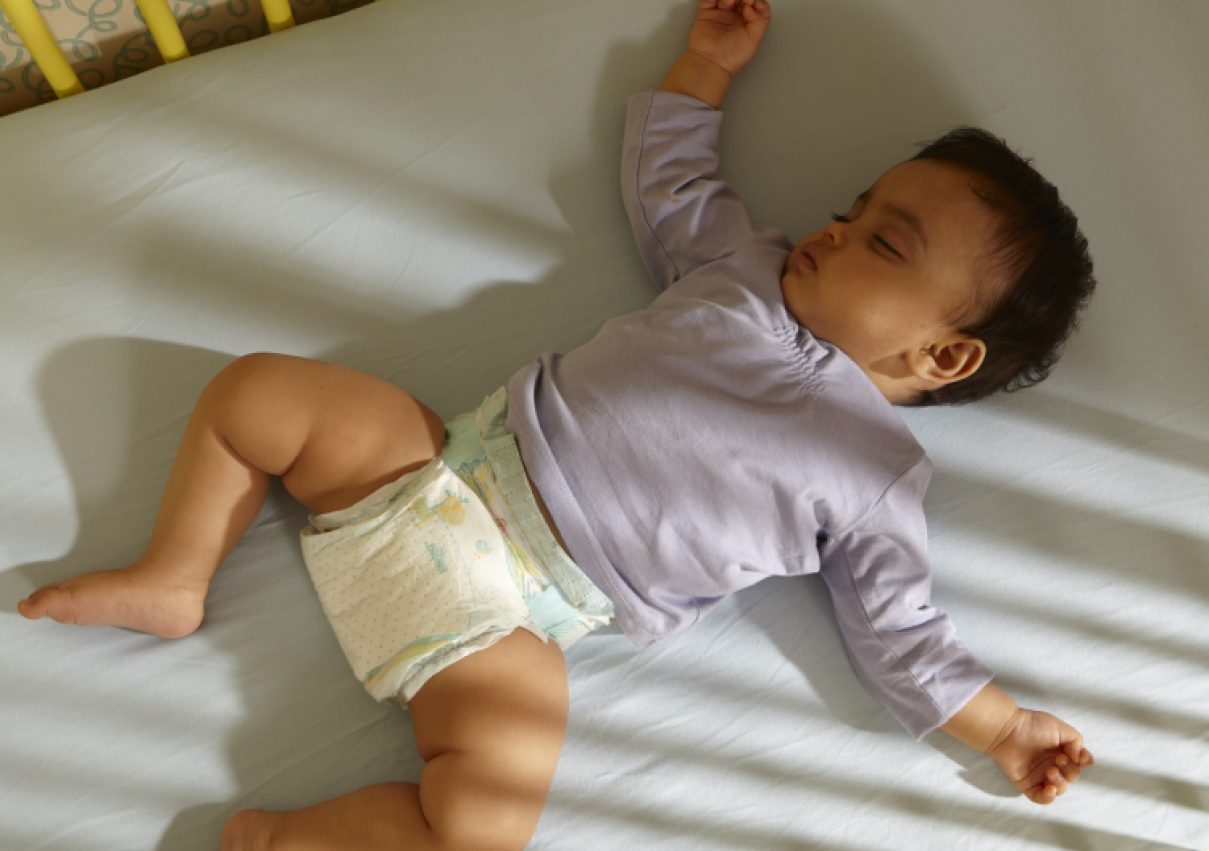
  • Keep your baby’s sleep space cool, flat, and hazard-free, and dress them in breathable layers or a sleep sack.
  • The 8-month sleep regression can last anywhere from a few days to six weeks but will pass quicker if you remain consistent with your bedtime routine and sleep schedule, avoid introducing new sleep habits, and support your baby's independent sleep skills.
  • Apps like Smart Sleep Coach by Pampers make it easier to stay on schedule, remain consistent, and navigate the 8-month sleep regression.

When your baby is 8-months-old sleep could be looking up. Whether it’s a more predictable schedule or even sleeping through the night, you may be starting to enjoy the consistent naps and longer stretches between wakeups. However, just like you saw around 4-months-old, the 8 month leap can cause a sudden "regression” back to frequent wakeups, difficult bedtimes, and refusing naps.

This can be frustrating, yes, especially if you finally are sleeping more – two-thirds of babies this age sleep between 6-8 hours straight at night! However, like all sleep regressions, the 8 month regression is temporary, and is easier to navigate once you know what to expect – and how best to approach it.

In this article we’ll go over everything our team of sleep consultants want you to know about the 8 month regression and answer common questions parents are asking, such as “What are 8 month sleep regression signs?”,  “How long does the 8 month sleep regression last?” and “How to approach sleep training for 8 month old not sleeping through the night?”

{{table_of_contents}}

What is the 8 Month Sleep Regression?  

The 8 month sleep regression is when your 8-month-old baby experiences a sudden and temporary disruption in their sleep. Even if your 8 month old has previously been a strong and consistent sleeper and napper, the 8 month regression can cause them to fall out of that schedule or pattern. It could show up as your 8 month old refusing naps, waking often at night, or even acting extra fussy.

The 8-month-old sleep regression often appears alongside milestones that commonly happen around 8-months such as teething, crawling, and separation anxiety. Some babies experience it around 9 months while some even earlier, closer to 7 months old.

There are many regressions throughout the first two years of life that are all timed to some sort of progression in your child’s development. Rest assured, these are completely normal – and, in fact, a very positive sign, even if they do cause some sleepless nights for you.

What Causes the 8 Month Sleep Regression?

The 8 month old regression is caused by developmental changes that happen around this age, often coinciding with your baby’s 8 month leap.  

While the 4-month sleep regressionn happens when your baby starts improving their motor skills, the 8 month sleep regression happens alongside milestones that show off their budding physical strength, independence, and maturity.

Crawling

One very exciting development for your baby is when they learn to crawl. They can explore their surroundings on their own – and may want to practice their crawling instead of sleeping. And, really, can you blame them?

Speech development

Like crawling, most 8-months-olds are continuing to figure out how to use their vocal cords. This is very exciting for them, and they may want to keep babbling and practicing new words instead of sleeping, which can lead to sleep regressions.

Teething

Most babies start teething at around 6-months and by 8-months may have several teeth poking through their gums, which can be uncomfortable and disrupt sleep. Also, sometimes teething can be more painful when lying down, like when they’re in their crib.

Personality

Your baby’s unique personality is continuing to develop this month. If your little one is particularly social, curious, or independent, exploring and chatting will be way more interesting to them than sleeping.  

Separation anxiety

8 month old separation anxiety at night is a common developmental stage that usually begins once your baby starts learning object permanence. Here is our article on dealing with separation anxiety in babies,

If you think there may be another reason your 8-month-old is struggling to sleep without you in the room, talk to your baby’s healthcare provider.  

What are the 8-month Sleep Regression Signs?

If you’re wondering, “What does the eight month regression look like?”: the signs aren't much different than other sleep regressions.  

  • You notice your 8 month old refusing naps
  • Your 8 month old baby refuses to go to sleep or seems to fight sleep
  • Your 8 month old won’t sleep at night but takes longer naps  
  • Your 8 month old wakes up screaming or crying at night  
  • Your 8 month old waking up every hour (or so it seems)
  • Your 8 month old won’t fall back asleep after waking up
  • You notice your 8 month old unusually fussy around nap or bedtimes  

How Long Does the 8-Month Sleep Regression Last?  

While the time frame varies from baby to baby, typically the 8-month sleep regressions last a few days to six weeks. It all depends on how consistent you are in your approach and not introducing new unhealthy sleep habits.  

You can shorten the 8-month-old regression and other future sleep regressions if you have established a strong sleep schedule and healthy sleep habits. The Smart Sleep Coach by Pampers™ app makes it easier to stick with your schedule and make sure your baby’s nap and bedtimes are properly aligned to their age and unique sleep needs. With real-time notifications, 1-click sleep tracking, and step-by-step guidance from real sleep consultants, this baby sleep app is a great addition for all parents – experiencing a sleep regression or not!

When Do Sleep Regressions End?

Sleep regressions end with the 2-year-old sleep regression – until then they will happen every few months when many major developmental milestones continuously happen.  

Keep in mind there are many things that can disrupt your child's sleep, even after sleep regressions officially end. Take this free sleep assessment to get a plan for handling any future setbacks, from dropping a nap to resetting after travel and transitioning from crib to a toddler bed.  

How to Manage the 8-month Sleep Regression

There are many ways to manage the 8-month sleep regression. Here are our top sleep consultant-approved tips on coping with sleep regressions:

Stick to your bedtime routine

Bedtime routines are the cornerstone of helping your baby sleep well – especially during a sleep regression. A soothing, consistent bedtime routine calms your baby after an exciting day and the repetition cues to them that it’s time for sleep.  

During a regression, when things may feel out of control, a consistent, predictable routine helps them get back on track faster.  

More on safe sleep for babies

Wait a moment

One way to cope with the 8-month sleep regression is to give your baby a bit of space to self-soothe if they wake up at night. The skill of falling asleep independently is a key skill that will help them develop independence and resilience. It’s also something we all biologically are able to do! Babies just sometimes need a bit of extra practice.  

With that in mind, if you hear your 8-month old cry out at night, wait a minute or two and give them a chance to try and self-soothe. Going into their room may wake them up more or escalate the situation.

If your baby is still awake after more than you consider reasonable, go check in on them with the lights low and, speaking in a low voice, try to shush them back to sleep without picking them up. Picking them up or trying to soothe them in a new way can lead to a new habit, or a sleep crutch, which can further elongate the 8 month regression.

Low lights, low voice

If you comfort your 8-month-old when they wake up at night keep the lights dim and speak in a soft, soothing voice to avoid stimulating them further.

Address separation anxiety

Though 8-month-old separation anxiety at night is normal, you can help alleviate it by playing games such as, “I’ll be right back”, or letting them practice alone time. Peek-a-boo can work, too.

To play “I’ll be right back”, place your baby in a safe space, say “I’ll be right back”, and then step out of sight for a minute or two.  When you return say, “I’m back!” This shows your baby that all is well if you leave and that you will return. You can increase your baby’s “alone endurance” by steadily increasing the amount of time you step away.

For many babies, continuing the sleep training approach they are familiar with helps support them during separation anxiety, while also helping the 8 month regression pass more quickly. This is because sleep training taps into a baby’s innate skill of falling asleep independently.  

Soothe teething pain

If you keep asking yourself “Why is my 8 month old so fussy?”, a common reason could be teething. Teeth coming in can be painful! To help comfort your baby at night, you can try teething rings or letting them chew on a cold washcloth. You can also speak to your healthcare provider to see if they recommend using an over-the-counter pain medication.

Revisit sleep training

If you previously sleep trained your little one, a little review of your method can help your baby overcome the 8-month sleep regression. If you sleep trained using the Smart Sleep Coach by PampersTM app, you can simply restart the method you chose in the app and follow the guidance step-by-step. Consistency is key to getting them back on track!

If you haven’t started sleep training, it’s never too late – take this free sleep assessment to get a personalized plan to get started on your path to better sleep. With a few tweaks to your baby’s sleep schedule and environment, many don’t even need to be formally sleep trained!  

Drop a nap

If you’re wondering how much sleep does an 8 month old need, typically it’s about 14 hours a day between nighttime and 2 or 3 naps. Often around 8-months your little is getting ready for that 3-2 nap transition, which is why a sleep regression can pop up around now, too.  

If your baby is getting too much sleep during the day, they may be struggling to sleep through the night. On the flipside, if they resist a nap and then go to bed too late, they could get overtired. Both scenarios affect nighttime sleep!

View a sample 8-month sleep schedule

When Should You Call Your Doctor About the 8-Month Sleep Regression?

If your 8-month-old is still struggling with sleep after two weeks and you also notice changes in eating habits, urination, or bowel movements, consult their healthcare provider to make sure it’s nothing more than the sleep regression.  

Final Thoughts

The lack of sleep that is often caused by the 8 month sleep regression can be trying for you and your baby, but it's important to remember that this blip in their sleep is proof they are growing and developing.

Between gaining an understanding of the world and going through physical changes, try to soak in the crawling, babbling, new teeth, and blossoming personalities – even if it does mean a little less sleep for a few weeks.

Just remember, even when your baby’s 8-month sleep schedule is disrupted, there are ways to cope and get your baby get back on track as soon as possible. Before you know it, your baby will be sleeping soundly again, and so will you...until the next sleep regression pops up around their first birthday.

Week 1
Know what to expect – for both you and your newborn.
Read about it on the appRead about it on the app
Welcome to the 4th trimester!
Know what to expect – for both you and your newborn.
Read about it on the appRead about it on the app
Want week-by-week updates on the Fourth Trimester?
Know what to expect – for both you and your newborn.
Download Smart Sleep Coach appDownload Smart Sleep Coach app
Curious if the Smart Sleep Coach App is Right for You?
Try the app free for a week – many parents see improvements in sleep after a few days!
GET STARTEDGET STARTED
Curious if the Chair Method is Right for You?
Tell us about your baby’s sleep and we’ll recommend a sleep training method – for free!
GET STARTEDGET STARTED
Curious if the Gentle Method is Right for You?
Tell us about your baby’s sleep and we’ll recommend a sleep training method – for free!
GET STARTEDGET STARTED
Curious if the Ferber Method is Right for You?
Tell us about your baby’s sleep and we’ll recommend a sleep training method – for free!
GET STARTEDGET STARTED
Curious if Pick Up, Put Down is Right for You?
Tell us about your baby’s sleep and we’ll recommend a sleep training method – for free!
GET STARTEDGET STARTED
Want to Shorten a Sleep Regression?
Tell us about your baby’s sleep patterns and we’ll create your custom plan – for free!
GET STARTEDGET STARTED
Better Sleep Without Sleep Training is Possible
Tell us a bit about your baby’s sleep and we’ll create your custom plan – for free!
GET STARTEDGET STARTED
Looking to Drop a Night Feed?
Tell us a bit about your baby’s sleep and we’ll create your custom plan – for free!
GET STARTEDGET STARTED
Looking to Drop a Night Feed?
Tell us a bit about your baby’s sleep and we’ll create your custom plan – for free!
GET STARTEDGET STARTED
Your Baby Can Be A Super Sleeper
Your personalized sleep plan is a few clicks away! Step-by-step sleep training with the Smart Sleep Coach app.
Get StartedGet Started

Tell us a bit about your baby’s sleep and we’ll create your custom plan – for free!

GET STARTED

Studies show new parents can lose as much as two hours of sleep every night after their baby comes!

“Thanks to the Smart Sleep Schedule, I’ve been able to follow my baby’s natural rhythm, and stick to the wake windows. This makes a huge difference in her ability to nap longer.”

Learn More
Tell us a bit about your baby’s sleep and we’ll create your custom plan – for free!
Studies show new parents can lose as much as two hours of sleep every night after their baby comes!
Looking to drop a night feed?

Tell us a bit about your baby’s sleep and we’ll create your custom plan – for free!

GET STARTED
What parents tell us

Thanks to the Smart Sleep Schedule, I’ve been able to follow my baby’s natural rhythm, and stick to the wake windows. This makes a huge difference in her ability to nap longer.

Discover the Smart Sleep Schedule
in this article:

FAQs:

During the 8-month sleep regression, many babies wake to seek comfort or reassurance rather than because of hunger. While it is still normal if a baby at 8-months wakes up for nighttime feeds, if yours has dropped the night feed and still wakes, gradually resettle them without introducing an extra feed.

Sleep training using your chosen approach or reinforcing gentle methods during the 8-month regression can actually strengthen independent sleep skills and help your baby get through the sleep regression easier. However, inconsistent sleep training during the 8-month regression can make things worse.

You can break the 8-month sleep regression by remaining consistent. Stick with your bedtime routine, follow your baby’s usual sleep schedule, maintain the best possible sleep environment, play white noise, and keep following your sleep training method if you are sleep training.

Major changes like travel, new caregivers, or daylight saving time can amplify regression symptoms. Try to maintain your baby’s bedtime routine and environment to help reestablish consistent sleep patterns faster.

The 8 month crisis may be referred to as the 8 month sleep regression, which occurs when your baby experiences a temporary disruption in their sleep triggered by various developmental milestones that occur around that time.

Yes it is normal that the 8-month sleep regression affects naps. The 8-month regression affects all parts of your baby’s sleep. Signs may include resisting naps, difficult bedtimes, or frequent wakeups.

A Personalized Plan to Transform Your Sleep

How old is your baby?

Thank you! Your submission has been received!
Oops! Something went wrong while submitting the form.

How We Wrote This Article

The information in this article is based on the expert advice found in trusted medical and government sources, such as the American Academy of Pediatrics and the American College of Obstetricians and Gynecologists. You can find a full list of sources used for this article below. The content on this page should not replace professional medical advice. Always consult medical professionals for full diagnosis and treatment.

Sources:

CDC, “Important Milestones: Your Child By Two Years”

Journal of Child Psychology and Psychiatry, “Nighttime sleep-wake patterns and self-soothing from birth to one year of age: a longitudinal intervention study”

The American Academy of Pediatrics, “2022 Updated Recommendations for a Safe Infant Sleeping Environment”

The Cleveland Clinic, “Infant Sleep Regression: What Parents Need To Know”

Written by
Mandy Treeby
Chief Baby Sleep Consultant

Co-founder of the Smart Sleep Coach by Pampers™ and Pediatric Sleep Consultant who has spent over a decade working with parents & babies around the world. Understanding just how many families are suffering sleep challenges, ignited her passion to make quality baby sleep coaching available to everyone. A Mom of two, she’s focused on ensuring parents gain the confidence and knowledge to help their babies’ become super sleepers, so the whole family can get more Zzzz’s!

Thank you! Your submission has been received!
Oops! Something went wrong while submitting the form.