

.webp)

Parents often wonder whether infants sleep more during teething. Generally, the pain and discomfort from teething disrupts a baby’s sleep – which can be difficult for everyone to navigate.
In this article we’ll discuss if babies and infants sleep more when teething, how teething affects baby sleep, and how to help your baby with teething pain at night so they can get the sleep they need.
{{table_of_contents}}
Do Babies Sleep More When Teething?
Babies typically don’t sleep more when teething. In fact, many babies sleep less because teething discomfort can lead to frequent night wakings and early morning wakeups. Interrupted nighttime sleep can also cause overtiredness, which may make it harder for babies to settle and stay asleep.
That said, teething can cause sleepiness during the day. Longer naps can happen as they try to catch up on missed nighttime sleep. Usually though that does equal more sleep overall.
When Do Babies Start Teething?
Babies start teething around 6 months, however the timing of teething can be different for every baby. Some start teething around 4 months while others can start later, around 12 months.
Teething timeline for babies
The American Dental Association gives an overview timeline of when primary teeth develop, which is what causes teething.
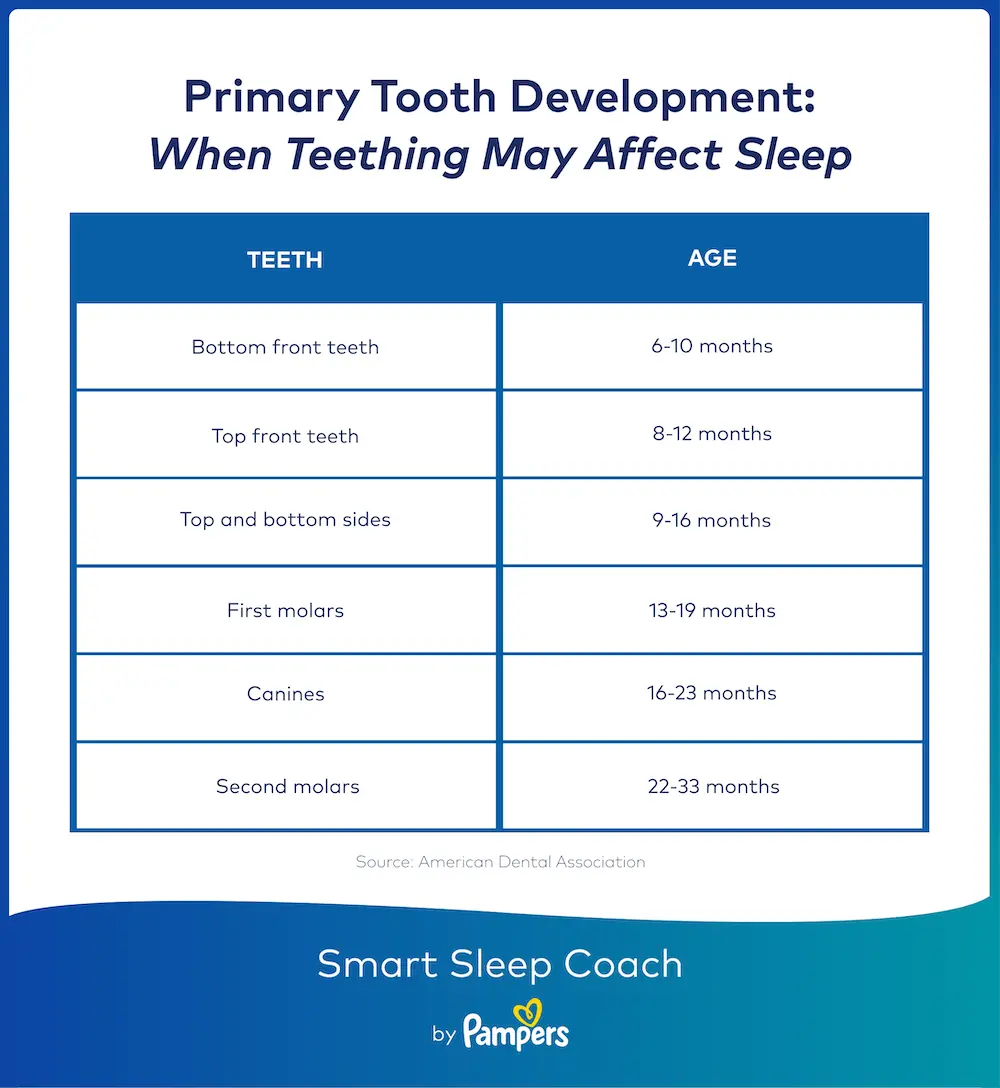
These are the common ages that teeth come in for babies and toddlers and when you may notice sleep disruptions:
- Bottom front baby teeth: 6-10 months
- Top front baby teeth: 8-12 months
- Top and bottom sides baby teeth: 9-16 months
- First baby molars: 13-19 months
- Canines baby teeth: 16-23 months
- Second baby molars: 22-33 months
By 33 months, most toddlers should have a full set of baby teeth. If you’re concerned about teething pain affecting sleep, or teething in general, speak to your healthcare provider or pediatric dentist.
What Are the Signs of Teething?
There are common signs of teething that can prepare you for the upcoming days and nights of disrupted sleep.
Common signs of teething:
- Swollen, Tender Gums: If the inside of your baby’s mouth is swollen, red, or has inflamed gums, they are likely teething.
- Excessive Drooling: One of the most common signs of teething.
- Chewing on Hands or Toys: If your baby is chewing on anything they can access, such as hard items, they may be doing so to relieve gum pressure. Make sure to keep small items and choking hazards away from babies and young children at all times.
- Irritability: If your baby is generally well-rested but showing irritability, they may be uncomfortable from sore gums.
- Sleep Regression: Teething often occurs at the same time as sleep regression, which is temporary bouts of disrupted sleep caused by developmental milestones.
- Rash on Face: Increased saliva from teething can cause rashes on the face. One red cheek also can be a sign of teething on the same side of the red cheek.
- Slight Fever: A slightly elevated temperature is not uncommon. You can always reach out to your pediatrician or healthcare provider if you’re concerned. If your baby is between 3-6 months old and has a fever 101°F (38.3°C) or higher, contact your healthcare provider immediately. If your child is over 6-month-old 103°F (39.4°C) or has a fever for longer than 5 days, also call your healthcare provider.
These symptoms tend to appear 3-5 days before the tooth erupts and subsides with eruption. Make sure to speak to your healthcare provider before administering pain medication.
Symptoms that aren’t signs of teething
If your baby is struggling to sleep and also experiencing the below signs, it’s likely not teething. Speak to your healthcare provider if your baby shows signs of:
- High Fever: A fever above 101°F (38.3°C) is not usually a sign of teething and could be a sign of illness.
- Diarrhea or Vomiting: Diarrhea and vomiting are not common symptoms of teething.
- No Gum Changes: If your baby isn’t exhibiting changes to their gum, such as swelling or redness, sleep disruption may be due to a different cause, such as a growth spurt.
Helping a sick baby sleep should be approached differently than helping a teething sleep. If your baby isn’t sleeping due to illness, consult with your pediatrician for guidance.
How Does Teething Affect Baby Sleep?
Teething affects baby sleep because pain, discomfort, and increased irritability can make it harder to fall asleep and stay asleep. In a study published in The Journal of Pediatrics about sleep disruption during teething, over half of the parents say they noticed changes in their infants’ sleep on days new teeth erupted, which included increased wakeups at night, reduced sleep duration, and more difficult bedtimes.
For some teething babies, daytime sleep may seem easier than nights. This is because teething at night can feel worse when there are less distractions. That means naps may go longer than usual as a result of lack of night sleep or being more comforted during daylight hours.
Additionally, teething pain and swollen gums can affect baby sleep by causing overtiredness. This can throw off a baby’s sleep cycle and further affect sleep. Remember: Because teething pain at night is common during a sleep regression, sleep could already be affected before teething begins.
Teething vs. Sleep Regression – What Is the Difference?
The differences between teething and sleep regression are hard to distinguish, especially since teething and sleep regression often overlap. Both are caused by developmental milestones being reached and lead to frequent wakeups, difficult bedtimes, and other temporary sleep struggles.
The difference is teething is a physical milestone, and the symptom of pain and discomfort from teething is what affects sleep. Sleep regression is defined as a temporary bout of sleep disruption caused by different developmental milestones being reached. Sleep regressions tend to be more noticeable in behavior. Both are normal and signify growth periods in a baby and toddler.
If your baby is refusing naps and resisting bedtime, but not showing any physical symptoms such as swollen and red gums, they’re likely to go through a sleep regression. Learn more on how to cope with sleep regression here.
Teething usually affects sleep temporarily and doesn’t typically change how much total sleep a baby needs overall. However, a baby’s sleep needs do change over time. If your baby is struggling with sleep and not teething, make sure you’re following an age-appropriate sleep schedule.
Teething Baby Sleep Tips
Here are a few expert-approved teething baby sleep tips designed to help soothe a teething baby and get them to sleep better at night.
Soothe teething pain before bed
Teething at night can feel worse for a baby. Here are methods that can help soothe your baby’s teething pain before bed:
- Gum Massage: To alleviate teething pain, gently rub your baby’s gums with a clean finger.
- Teething Ring: Offering a teething ring helps your baby “target” the right areas and massage their gums. Stick to hard rubber teething rings as gel-based options can be hazardous, and make sure it’s clean.
- Chilled Washcloth: Press a cool washcloth against your baby’s gums or let them chew on the washcloth to help alleviate pain. Always supervise your baby if you’re using the washcloth method.
- Chilled Fruit: If your baby is being introduced to solid foods, you can serve them chunks of fruit from the fridge to chew on to relieve pain.
- Chilled Metal Spoon: A chilled metal spoon is soothing for a teething baby in pain.
Offer comfort but don’t introduce new habits
Try not to introduce new habits like holding your baby to sleep or feeding them to sleep. They likely will develop a reliance on that to sleep, even after teething pain helps.
Instead, additional cuddles and kisses can offer emotional support and positive reinforcement to get a teething baby to relax enough for sleep. You can also try a nice, warm bath before bedtime to help calm your baby enough to sleep. A gentle baby massage may help, too.
Stick to your bedtime routine
Consistency is key. A bedtime routine provides your baby with a cue that it’s time to sleep even if they’re experiencing discomfort from teething.
Follow baby sleep safety
Safe sleep for babies, even when teething, includes putting a baby under 12-months-old on their back to sleep and keeping soft objects outside of the crib until their first birthday.
Ask about teething medications
There are many teething medicines out there, including over-the-counter options. If you’re considering medication, consult your healthcare provider to discuss what’s appropriate for your baby.
Consider your sleep training method
If your baby is teething while sleep training, you can decide to be more flexible with your method. Try not to introduce new habits, but you can consider a more gentle approach for a few days.
Sometimes you may need to re-sleep train your baby if their sleep is thrown off from teething pain at night. However, usually babies have an easier time with sleep training if they went through it before successfully.
If you want to change or restart sleep training, download the Smart Sleep Coach by PampersTM app. You can choose a method, change your method, or start or restart sleep training right from the app.
How Smart Sleep Coach Can Help During Teething
Smart Sleep Coach is a baby sleep app that can help during teething by creating a personalized sleep plan to nurture your baby’s sleep habits. This includes an age-appropriate sleep schedule proven to make it easier to fall asleep and stay asleep when experiencing teething pain.
Whether they were struggling with sleep before teething started or developed a new habit that is affecting their ability to fall asleep without your support, take this free sleep assessment to get started with improving their sleep.
Since teething can also cause disruptions in your baby or toddler’s sleep habits, the Smart Sleep Coach can guide you through sleep training to get them back on track after the tooth emerges.
Unlike competitors, Smart Sleep Coach addresses how to protect healthy sleep habits from before teething starts, giving your baby a solid foundation to navigate sleep challenges with ease.
Final Thoughts
Teething pain and sleep disruption go hand-in-hand. Similar to when babies sleep more when sick, teething pain can lead to restless nights, more wakeups, and extra daytime sleepiness. The good news is that teething discomfort is temporary and won’t affect sleep forever.
Following teething tips before bed can help ease discomfort and make sleep easier while your baby’s tooth emerges. A consistent routine with some flexibility can also help support sleep without disrupting their sleep habits.
If your baby’s sleep feels off during teething, tools like Smart Sleep Coach can help you get back on track with personalized guidance and support through teething and the many other developmental phases that can – and will – affect sleep.


