


Swaddling a newborn is a way for parents to make their new baby feel safe and comfortable as they transition from the womb into the world and help support their sleep. But, despite the commonness of the practice, not all newborns like being swaddled or sleep well with one.
In this article, we’ll answer the common question of do you have to swaddle a newborn to sleep and everything to know about why do you swaddle a baby – and if there is ever a time you should not.
{{table_of_contents}}
Should I Swaddle My Newborn at Night?
Do you have to swaddle a newborn at night? This is a question many parents ask their sleep consultant or healthcare provider after their baby is born.
Swaddling at night, and during the day, can help soothe your newborn, keep them warm and comfortable, and support better sleep by mimicking the secure feeling of being in the womb. Since newborn sleep happens in short stretches – usually every 2-3 hours for feeds – swaddling can help your baby get the most restful sleep possible during those periods so you can get some rest too.
Swaddling is safe and commonly recommended by healthcare providers when done correctly.
Newborns spend a lot of time in active sleep, which means they move frequently, twitch in sleep, and can easily wake themselves up. Wrapping your baby snugly in a light, breathable swaddle can help prevent sudden movements – including the Moro reflex – from startling them awake.
However, swaddling should stop once your baby shows signs of rolling over from back to front. When to stop swaddling your baby is different for each baby but can be as early as 2-months-old.
Can My Newborn Sleep Without a Swaddle?
Your newborn can sleep without a swaddle. In fact, many babies prefer to sleep without a swaddle. Not all babies find it comforting and it’s okay if your baby doesn’t.
However, it can take a few days for your baby to get used to being swaddled. After they get used to it, they may start sleeping better.
If you’re concerned about your baby not enjoying being swaddled, consult with your healthcare provider.
Why Do You Have to Swaddle a Baby?
You do not have to swaddle a baby. Swaddling a newborn at night and during the day isn’t necessary but it does mimic the womb feeling which helps your baby feel secure and comfortable and boasts a bunch of other benefits too.
Benefits of swaddling a newborn include:
- Swaddling makes it easier for your baby to settle for sleep
- Swaddling prevents a baby’s natural startle reflexes or Moro reflex that happens in newborn active sleep from waking your baby
- Swaddling newborns can help them stay asleep longer in between feedings and experience fewer unnecessary awakenings
- Swaddling helps maintain the optimal body temperature for a newborn baby, which they need help regulating early in age
- Swaddling helps your baby remain on their back which is the safest for preventing Sudden Infant Death Syndrome (SIDS) (more on baby sleep safety)
The research behind the benefits of swaddling a newborn are debated by different experts. Speak to your healthcare provider for personalized guidance.
Whether you decide you should swaddle your newborn or not, take this free sleep assessment to get a personalized plan to further support their healthy sleep. Developed by pediatricians and sleep consultants, the Smart Sleep Coach by PampersTM app includes step-by-step guidance and a custom sleep schedule to help you take some of the guesswork out of tackling the first few months of sleep with a newborn.
How to Swaddle a Newborn Safely – Step-By-Step
When it comes to deciding if you should swaddle a newborn baby, it’s important to know how to do it correctly – and that you know when to stop.
It’s very important to keep your baby’s hips loose to prevent hip dysplasia. If you have concerns about swaddling, talk to a trusted provider. There may be certain situations where a healthcare provider doesn’t recommend swaddling for your baby, such as if you’re struggling to swaddle them correctly.
How you should swaddle a newborn:
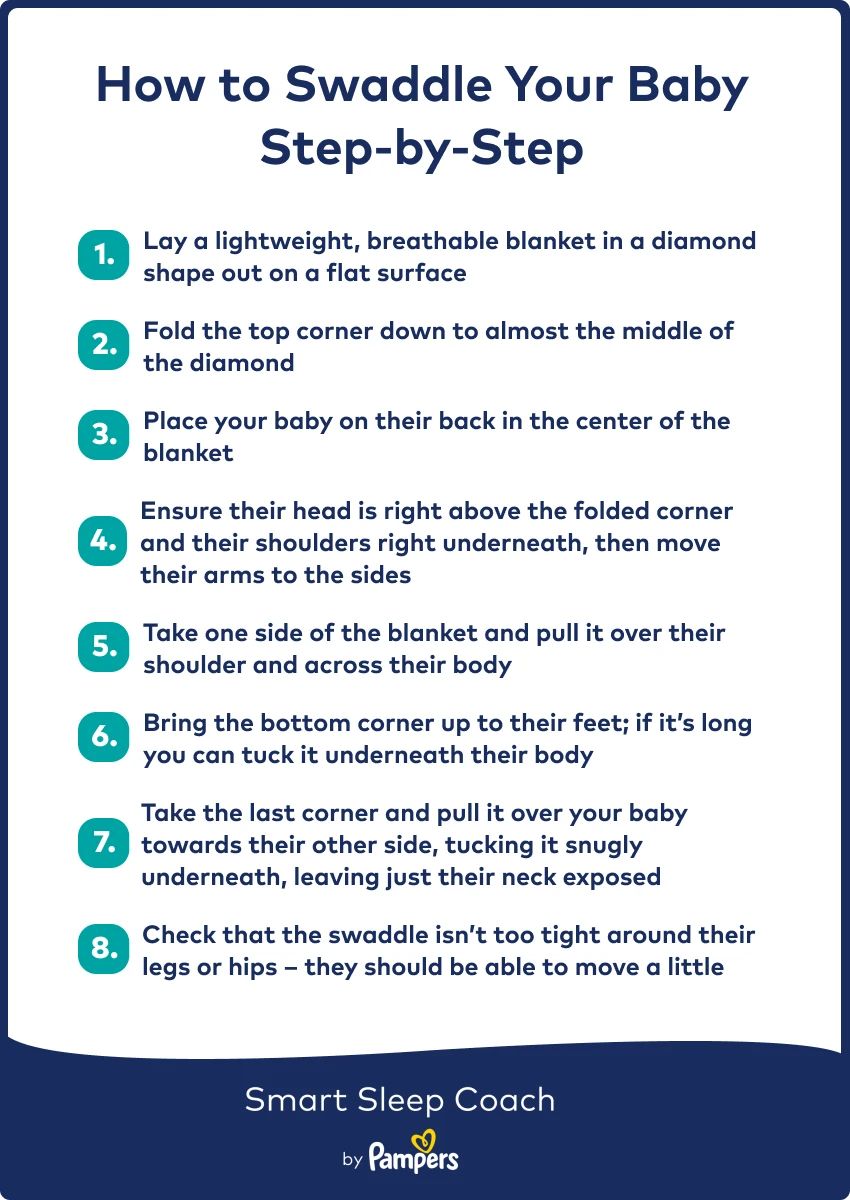
For more on swaddling, check out our step-by-step guide on how to swaddle a baby as well as everything you need to know about when to stop swaddling a baby and how to transition out of swaddle.
What type of swaddle is best?
If you decide you should swaddle your newborn, knowing how to dress your baby for sleep and what type of swaddle to use is important.
Traditionally, babies are swaddled in light, breathable fabrics, but there are a number of other options for swaddles out there including lightweight swaddle blankets, swaddle sacks, or arms-up swaddles.
What type of swaddle works best for your baby is dependent on both their and your preferences. 100% cotton or bamboo are recommended for traditional wraps.
The American Academy of Pediatrics (AAP) and other health authorities strongly advise against weighted swaddles in newborn babies. Additionally, babies should never sleep with a blanket that’s loose until their first birthday.
What if My Baby Resists Swaddling?
If your baby resists swaddling, constantly breaks free from the wrap, or becomes fussy when you swaddle them, these might be signs that your newborn doesn’t like to be swaddled. That’s okay though – you don’t have to swaddle a newborn.
It sometimes, however, takes time to get comfortable with a swaddle. If your baby resists swaddling, consider the following:
- Is the room the ideal real temperature or is the swaddle fabric breathable enough?
- Is the swaddle too loose or snug?
- Does your baby like to have their arms or legs out?
If this is the case, try these alternatives:
- One-arm-out or arms-up wrapping for babies
- Swaddle products that allow for more movement such as swaddle sacks
- Sleep sacks to keep your baby warm and comfortable
If your baby resists these alternatives, it is absolutely safe for newborns to sleep without being swaddled. While swaddling can soothe babies, it’s not necessary for healthy sleep!
Swaddling and Independent Sleep – What Parents Should Know
Parents should know that swaddling can be a helpful tool during the newborn stage as your baby adjusts to life outside the womb. At this age, babies rely heavily on external support to settle to sleep, and swaddling can help by recreating the snug, secure feeling they were used to before birth.
Once they near the end of 4th trimester, they also will reach the developmental milestone of being able to roll independently. At this time it will become unsafe to be swaddled, due to the increased risks of rolling onto their stomach and not being able to roll back.
This stage also often comes with an important developmental milestone: your baby is becoming more capable of getting comfortable with falling asleep with less support.
Around this time they also will biologically be able to fall asleep independently. The Smart Sleep Coach by app can help you build healthy sleep fundamentals and make the transition to more independent sleep feel easier when your baby is ready.
Final Thoughts
Swaddling isn’t necessary for newborns, though it’s a common process.
If your baby is resisting the swaddle, try out alternatives such as arms-up swaddling or swaddle sacks before ruling out swaddling.
Remember, swaddling should be stopped once your baby shows signs of rolling over. If you have any questions or concerns about swaddling, talk to a trusted healthcare provider.


