



It’s normal to feel confused or overwhelmed about all the different approaches to and terms of sleep training and how they differ. Two well-known methods of sleep training are Cry It Out and Ferber method. Both fall within the range of extinction-based sleep training, but they differ in how much parental check-ins and support are included.
In this article, we’ll break down the Ferber method vs CIO, explain what graduated extinction method sleep training means, and help you decide if either approach feels right for you and your family.
{{table_of_contents}}
Ferber Method vs Cry It Out: What’s the Difference?
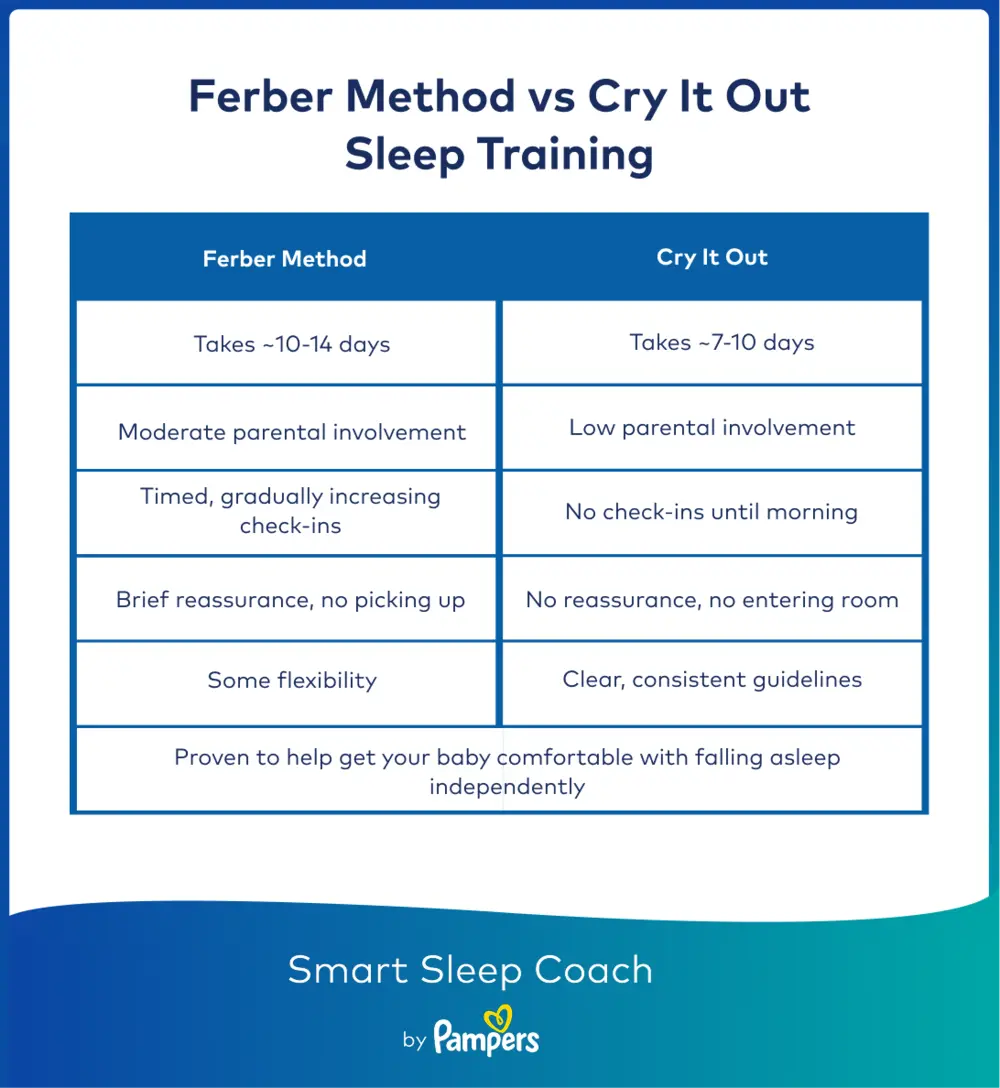
The biggest difference when comparing Cry It Out vs Ferber method is the amount of parental involvement.
- The Ferber method, also known as graduated extinction, includes timed check-ins, which means you use set time periods between checking on your baby if they protest falling asleep. The goal is to gradually increase the time between check-ins overtime to gradually fade out the parental support your baby relies on to fall asleep. While there are clear guidelines, you can also personalize the approach to fit your comfort level and goals. For example, there is flexibility such as the length of time you wait to enter the room if your baby protests.
- The Cry It Out method, also known as extinction method sleep training, does not include physical check-ins once your baby’s bedtime routine is complete and they are safely placed in the crib. You leave your baby safe in their crib until their usual wake up time, giving them the space and time to fall asleep independently.
Both approaches aim to help your baby develop the same skill: falling asleep without external support such as rocking, feeding, or being held. Sleep training isn’t about forcing your baby to “sleep through the night” – many babies usually continue to wake overnight for night feeds – but about helping them resettle on their own.
Some health authorities and healthcare providers don’t recommend leaving your baby crying for prolonged periods of time. Speak to your healthcare provider before beginning any method of sleep training.
What is the Ferber method (graduated extinction)?
The Ferber method was founded by Dr. Richard Ferber as a structured form of sleep training. It sometimes is called graduated extinction or the interval method. In this approach:
- You put your baby into their sleep space sleepy but awake
- You leave the room
- If your baby cries, you return after a predetermined interval that gradually increases night by night (apps like Smart Sleep Coach by PampersTM have a timer to help you here)
- During check-ins, you offer brief reassurance (like shushing or a gentle pat) without picking them up, then leave again
- You continue until they fall asleep and repeat if they wake overnight
These check-ins give parents a way to stay responsive while encouraging independent sleep skills. It’s often described as a middle ground between more hands-on gentle methods and full extinction like Cry It Out.
More on the Ferber method here
What is Cry It Out (extinction method sleep training)?
Cry It Out (CIO) sleep training, which is also known as the extinction method, involves supporting your baby’s independent sleep by giving them the space and time to get used to calming and soothing themself to sleep.
CIO is typically considered the lowest parental involvement approach because once the bedtime routine is complete and your baby is safe and all needs are met, you place them in their crib and, even if they don't fall asleep right away, don’t re-enter the room until morning. Many families find that this clarity helps babies figure out how to put themselves to sleep quicker.
If your baby still wakes overnight for feeds during CIO sleep training: You set specific times where feeds happen and then place them back in their crib afterwards to fall back asleep.
Crying can happen with all sleep training methods as babies adjust and research and pediatric sleep experts show that CIO sleep training isn’t harmful when used properly and when your baby is developmentally ready. That said, many health authorities don’t recommend leaving babies to cry for prolonged periods of time. Consult with your healthcare provider before using any type of sleep training method.
More on the Cry It Out method here
Which Works Faster – Ferber or Cry It Out?
CIO often works faster than Ferber because there are no check-ins that risk stimulating or re-engaging the baby. Also, a more black and white approach, especially in older babies or when sleep training a toddler, can help break whatever habits are causing difficulty with independent sleep.
However, what works faster can depend on:
- your baby’s temperament
- their age and developmental readiness
- consistency in delivery of the chosen method
In many cases, regardless of Ferber vs CIO, progress with these sleep training methods is seen within a week of consistent use – though every baby is different.
Take this free sleep assessment to get your plan for getting your baby’s sleep back on track and help you with choosing between Ferber vs CIO. For some babies, the right schedule, environment, and routine is all that’s needed to fall asleep at night – and stay asleep until morning.
Is Extinction or Graduated Extinction Safe?
Extinction and graduated extinction sleep training methods are safe when your baby is developmentally ready, their sleep environment is set up correctly, and all their needs are met before bedtime. Research shows there is no long-term emotional harm or danger from all forms of extinction methods when done correctly.
Here are some safety considerations:
- Wait until your baby is at least ~4 months old to sleep train
- Get approval to sleep train from your healthcare provider
- Make sure your baby is comfortable and has a clean sleep diaper (we recommend Pampers Swaddlers)
- Ensure your baby is fed before bedtime routine begins
- Reconsider starting sleep training if your baby is sick
- Make their sleep space the ideal room temperature
- Follow all baby safe sleep guidelines such as no transitional objects other than a pacifier or loose blankets in crib before your baby’s first birthday
What Pediatricians and Sleep Experts Say About Cry It Out vs Ferber
Pediatricians, sleep experts, and healthcare organizations may differ in how they personally approach sleep training, but research shows that both the Cry It Out method and the Ferber method are safe and effective ways to support healthy sleep habits when used appropriately.
Several large studies have found that sleep training methods including extinction and graduated extinction can improve sleep without long-term negative effects on a child’s emotional development, attachment, or stress levels. That said, health authorities may frame their guidance differently. For example:
- The American Academy of Pediatrics (AAP) supports sleep training for infants who are developmentally ready, while reinforcing the importance of safe sleep practices and secure attachment.
- The National Sleep Foundation says consistent bedtime routines and age-appropriate schedules are key components of successful sleep training, regardless of the method chosen.
- The National Health Service (NHS) in the UK advises parents not to leave babies to cry for long periods without comfort and emphasizes responsive caregiving, especially in younger infants.
- The World Health Organization (WHO) does not issue specific recommendations on sleep training methods like Cry It Out or Ferber but focuses its guidelines on overall sleep health and safe sleep practices, including how much sleep children need and creating environments that reduce risks like sudden infant death syndrome (SIDS).
However, across organizations they all agree that when you consider sleep training:
- Safe sleep practices are in place
- Age readiness matters
- Growth, weight, and feeding should be stable
- Approval from healthcare provider
- Consistency is key
- Your comfort level as a parent is important, too
Final Thoughts
Both the Cry It Out and Ferber sleep training methods are designed to support your baby in getting comfortable with falling asleep independently and resettling between normal wakings that happen between sleep cycles. Neither method is about “forcing” your baby to sleep through the night – and both come from a place to help your baby get the best sleep possible.
Ultimately, when implemented thoughtfully and consistently, both methods are evidence-based and proven to support babies in building healthy, independent sleep skills. Whatever method you choose, or whether you even choose to sleep train, know that an age-appropriate schedule, routine, and environment often play the biggest part in healthy sleep habits.
You know your baby best, and apps like Smart Sleep Coach by PampersTM are here to make whatever you choose in terms of sleep training as easy to implement, helpful, and effective as possible.


