


It’s completely normal to feel overwhelmed when comparing the many different sleep training methods. There’s a wide range of approaches, with gentle sleep training on one end of the spectrum and the Cry It Out method on the other.
With so many terms used to describe these methods – extinction, gradual approaches, sleep training without tears, give baby a chance method – it can be hard to know what each one means and which might be the best for you and your baby.
In this article, we’ll break down the core differences between CIO vs gentle sleep training and share guidance to help you decide which approach feels right for your family – or whether another sleep training method may be a better fit.
{{table_of_contents}}
Cry It Out vs Gentle Sleep Training: The Core Differences
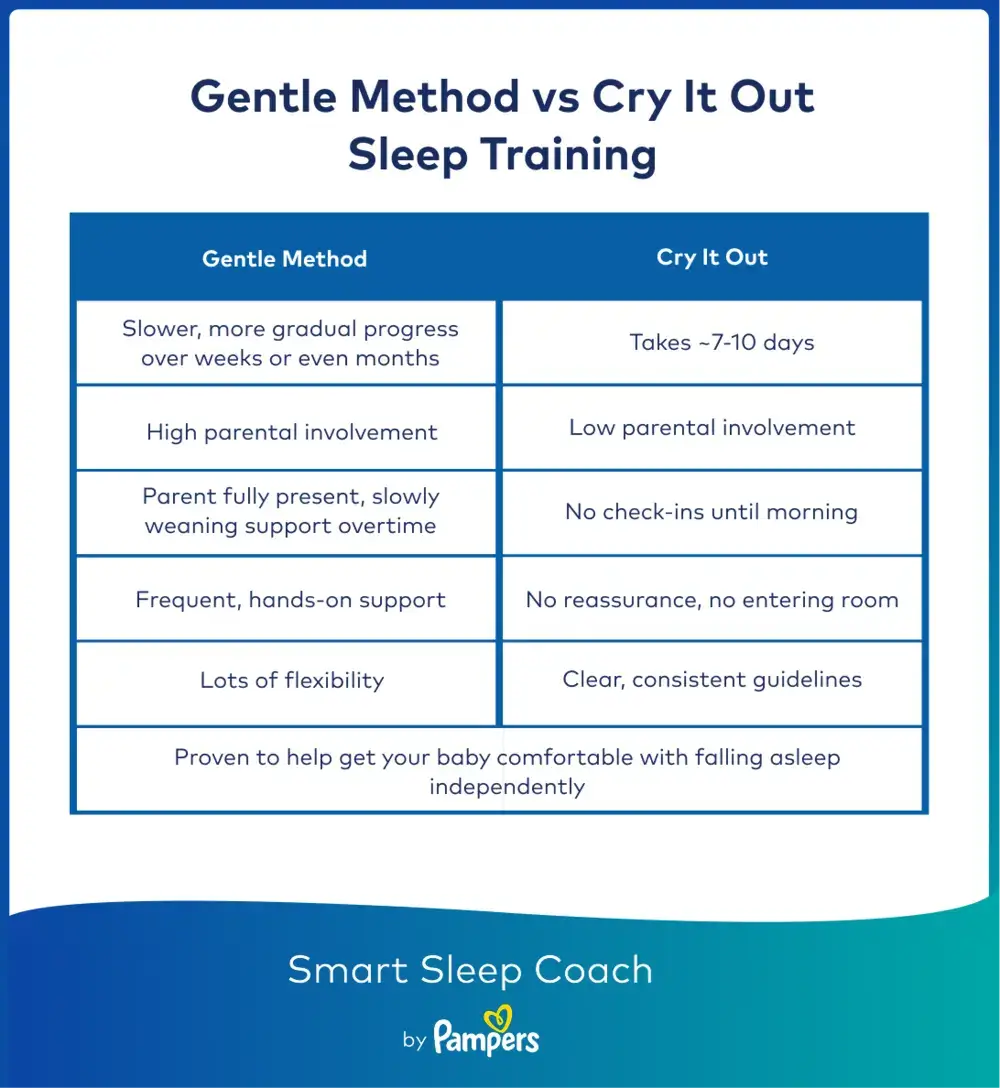
The core differences of Cry It Out vs Gentle sleep training is how the skill of independent sleep is supported, how much support you offer your baby while they get comfortable with falling asleep independently, and how long each take to work.
Main differences include:
- Gentle sleep training is a more gradual process, taking weeks even months, while Cry It Out can take as little as 7-10 days.
- Gentle methods require lots of parental involvement while Cry It Out is more hands off from the start.
- CIO has more consistent and clear guidelines than gentle methods.
One of the misconceptions of all sleep training, whether it’s through CIO or gentle methods, is that the goal is for your baby to sleep through the night. The truth all sleep training is about helping them build independent sleep skills, so that when they naturally wake between sleep cycles, they don't rely on your support to fall back asleep. In fact, many babies wake for feeds during sleep training, even with CIO, and continue to do so well into their first year of life.
While all sleep training methods should not be started until your baby is at least 4-months-old, over 12 pounds, and has approval from your healthcare provider, some experts believe that the Cry It Out method may be more successful for older babies. This could be for many reasons, including that babies older than 8-months-old understand object permanence so would do better with a black-and-white approach. Plus, they have increased stamina for protesting which can make gentle approaches take a long time. Finally, parents of older babies may have more energy or an easier time remaining consistent with an approach with less parental involvement.
What is the Cry It Out Method?
The Cry It Out (CIO) method – sometimes called extinction sleep training – involves placing your baby in their crib at bedtime when they are sleepy and calm but awake, then leaving the room so they have the space and time to fall asleep independently. It’s called “Cry It Out” because, after their needs are fully met, they’re given the opportunity to settle on their own – and that adjustment period may include some crying, especially in the beginning.
CIO works like this:
- You meet all needs before bedtime (feeding, sleep diaper, cuddles)
- You place your baby in their sleep space
- You leave the room
- You don’t enter their room until their scheduled wake up time or during any scheduled overnight feeds, unless it’s an emergency
Because there are no check-ins, CIO is considered the lowest parental involvement approach of sleep training. Some families prefer the clarity and consistency of this method, and many babies respond to it very quickly – the fastest sleep training method is Cry it Out in many cases. While crying may happen during the first few nights with any sleep training method, with CIO oftentimes babies start falling asleep independently within days.
Is Cry It Out bad?
Cry It Out is not bad, it’s actually one of the most effective and quickest ways to help your baby build their independent sleep stills and start sleeping better at night.
While crying can happen at the beginning of any method, research – including long-term follow-up studies – has found no evidence of lasting emotional harm, attachment issues, or increased stress when extinction methods are used appropriately.
That said, just like with any sleep training method, CIO may not feel right for every family. Some healthcare organizations emphasize responsive caregiving, especially in younger infants, and don’t recommend leaving babies to cry for extended periods of time. Speak to your healthcare provider to get their opinion and always get their approval before beginning any sleep training approach.
What Is Gentle Sleep Training?
If you’re wondering what is gentle sleep training, it generally refers to the different sleep training approaches that gradually reduce parental support while offering more responsiveness and reassurance.
Gentle sleep training is often described as:
- Sleep training that is not cry it out
- Sleep training without tears (though some crying may still occur as your baby adjusts)
- A more hands-on transition to independent sleep
- Lots of flexibility
- Slower, more gradual process over weeks or even months
Common gentle sleep training methods
While these gentle methods prioritize parental presence and are responsive, they still work towards gradually developing your baby’s independent sleep skills. There's a range of what's considered gentle and you can be flexible with how you approach it. Some parents call it a give your baby a chance method – simply, see if they can fall asleep on their own!
Two popular gentle sleep training methods include the Bedtime Fading and Shuffle methods. Both can be done on your own timeline or can be used with a timer.
Bedtime Fading
The Gradual Fading method, also known as Bedtime Fading, has you gradually reduce the amount of support you provide at bedtime – for example, rocking your baby for a little less time each night before putting them in the crib. You can reduce it a set amount each night using a timer. The goal is for your baby to naturally fall asleep on their own in their crib.
Shuffle Method
Also known as “Gradual Guardian”, the Shuffle method is a gentle sleep training approach where you stay in your baby’s room sitting on a chair at bedtime, calming them if they protest by picking them up or gentle patting them, and continuing the process until they fall asleep. Each night, you slowly move the chair farther away until your baby gets comfortable falling asleep independently without you nearby. It can be considered a version of the Chair method.
Which Works Faster: Gentle Sleep vs Cry It Out Method?
CIO often works faster because it’s clear and consistent with no mixed signals. Gentle sleep training methods may take longer because they involve more interaction and gradual changes. Some babies may be soothed by the constant reassurance while others may become more frustrated.
Typically ,it can take as little as 7-10 days to successful sleep train with Cry It Out compared to weeks or even months with a more gentle method. That said every baby is different and some may start having improvements within days.
Oftentimes speed depends on:
- Your baby’s temperament
- Their age and sleep history
- Consistency
- Schedule alignment
- Developmental readiness
You can always change your method after a week or so to see if another one fits better. Try to give it at least a week though – habit change takes time!
Choosing Between CIO vs Gentle Sleep Training
When deciding between CIO vs gentle sleep training, consider:
- Your comfort level with crying
- How quickly you’d like to see progress
- Your baby’s temperament
- Your ability to stay consistent
- Your long-term sleep goals
There is no “best” method – only what works best for your family.
Some parents start with gentle sleep training and shift approaches if needed. Others prefer the clarity of the cry it out method from the beginning. There’s a range of methods in the middle of them too that require less parental involvement, such as Ferber method or the Pick Up, Put Down method.
Some parents use different sleep training for naps and nights. Typically sleep training for naps should come after sleep training at nights. Cry It Out for naps can work well, especially for babies on a set nap schedule.
Regardless of what you choose, both CIO and gentle methods share the same goal: helping your baby get comfortable with falling asleep independently and resettling between normal night wakings.
Keep in mind: For some babies, finding the right schedule and routine alone dramatically improves sleep – no sleep training required. Download the Smart Sleep Coach by Pampers app to see if your baby’s schedule is age appropriate and synced with their natural rhythm – if not, that could make all the difference in whether you need to sleep train with gentle, CIO, or any method at all.
Final Thoughts
There is a wide range of sleep training methods and gentle and Cry It Out sit on either side. Part of what should be considered when choosing which method is right to you is that most sleep training approaches involve some crying after its first started. “Without tears” often means fewer tears, not zero tears.
If you’re curious what method is right for you and your baby, the Smart Sleep Coach app has a sleep training method questionnaire that can recommend an approach, ranging from more gentle to one with less parental involvement depending on your goals and parenting style, and your baby’s temperament.
Whatever you decide, when done safely and with approval from your healthcare provider, sleep training is an effective way to support the important, lifelong skill of healthy sleep!


